

BLOG
7 Signs Your Rack End Is Failing and When to Replace It
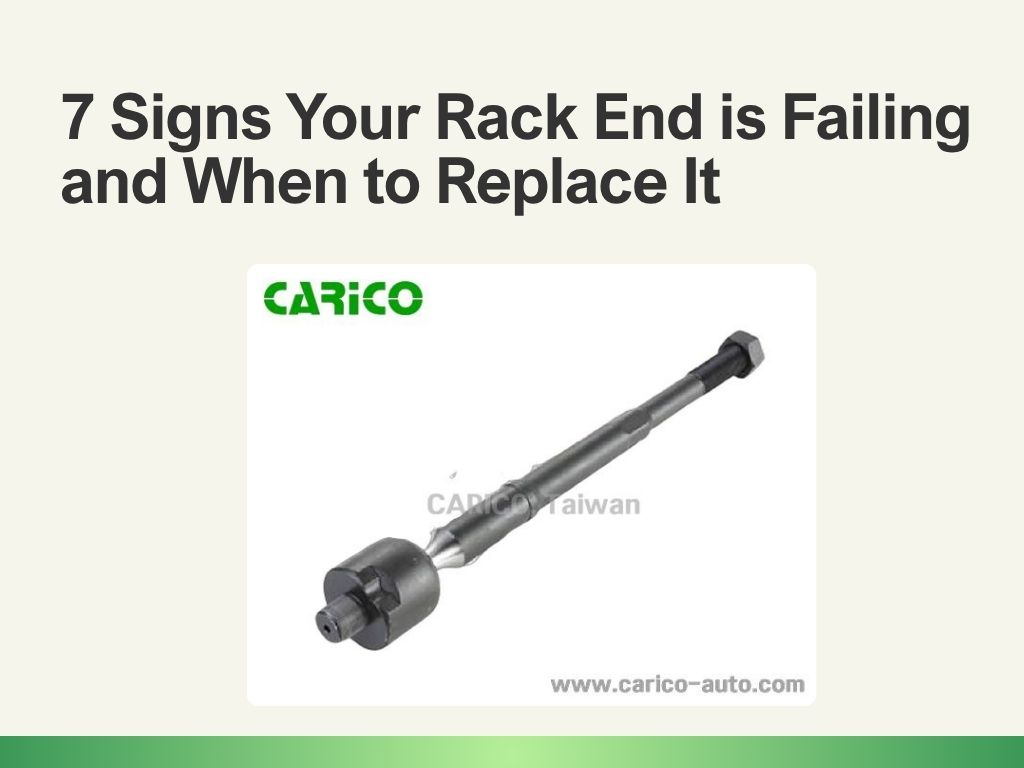
The rack end is a critical but often overlooked component in your vehicle’s steering system. Positioned between the steering rack and tie rod end, it helps transfer steering input from the steering wheel to the wheels while maintaining alignment and steering precision. When a rack end begins to wear out, the result can be loose steering, uneven tire wear, and even serious safety concerns.
For vehicle owners, repair professionals, and parts distributors alike, recognizing the warning signs of a failing rack end is essential for preventing further steering system damage and maintaining safe driving performance.
In this article, we’ll cover the 7 most common signs of rack end failure, explain when replacement is necessary, and discuss why choosing high-quality steering components matters.
What Does a Rack End Do?
Before discussing failure symptoms, it’s important to understand the role of a rack end.
A rack end—also called an inner tie rod in some markets—is the steering linkage component that connects the steering rack to the outer tie rod end. It allows steering force to transfer smoothly while accommodating suspension movement.
Because the rack end operates constantly during driving, it is subject to:
- Repeated steering movement
- Road shock and vibration
- Dirt, water, and contamination
- Wear from suspension articulation
Over time, these factors can lead to looseness and deterioration.
1. Loose or Wandering Steering Feel
One of the earliest signs of rack end wear is loose steering response. Drivers may notice:
- Excessive play in the steering wheel
- Delayed steering response
- Difficulty maintaining a straight line
This happens because worn internal joints in the rack end create slack in the steering linkage.
2. Clunking or Knocking Noises When Turning
A worn rack end often produces clunking or knocking sounds during:
- Sharp turns
- Low-speed maneuvers
- Driving over bumps while steering
These noises occur when excessive internal clearance allows metal components to move abnormally.
3. Uneven Tire Wear
Rack end wear can alter wheel alignment geometry, leading to:
- Inner or outer tire edge wear
- Feathering across the tread
- Premature tire replacement
If alignment problems persist even after alignment service, worn steering components such as rack ends may be the root cause.
4. Steering Wheel Vibration
Damaged or loose rack ends may cause vibration in the steering wheel, especially:
- At highway speeds
- During cornering
- On rough road surfaces
Because the steering linkage is no longer stable, road vibrations transfer more directly into the steering system.
5. Poor Steering Return After Turning
After completing a turn, the steering wheel should naturally return toward center. A failing rack end can interfere with this motion, causing:
- Sluggish steering return
- Sticky or inconsistent steering feel
- Need for manual correction after turns
6. Visible Damage to Dust Boot or Joint
During inspection, technicians may observe:
- Torn or cracked dust boots
- Grease leakage
- Corrosion around the joint
- Physical looseness when manually checked
Once contaminants enter the rack end joint, wear accelerates rapidly.
7. Failed Steering Inspection or Alignment Check
Many worn rack ends are discovered during:
- Suspension inspections
- Wheel alignment service
- Safety inspections
Technicians may detect play by physically moving the steering linkage or observing excessive movement in the joint.
When Should You Replace a Rack End?
Rack ends should be replaced when:
- Excessive play is detected
- Steering precision is compromised
- The protective boot is damaged and contamination has occurred
- Steering noises persist after other components are ruled out
- Alignment cannot be properly maintained
Because rack ends directly affect steering safety, delaying replacement can increase wear on:
- Outer tie rods
- Tires
- Steering rack
- Suspension joints
Why Quality Rack Ends Matter
Rack ends may appear simple, but their internal tolerances and materials significantly affect steering feel and durability.
Poor-quality rack ends can lead to:
- Premature looseness
- Short service life
- Inconsistent steering response
- Increased warranty and return issues
For distributors and repair shops, sourcing reliable steering components helps improve customer satisfaction and reduce service comebacks.
As an experienced auto parts supplier, Carico supports global customers with a wide range of steering and suspension components, including rack ends designed for precise fitment, stable steering performance, and dependable durability.
FAQ About Rack End Replacement and Failure
How long does a rack end typically last?
A rack end usually lasts between 80,000 to 150,000 kilometers, depending on road conditions, driving habits, and overall suspension maintenance. Vehicles driven on rough roads or under heavy loads may experience faster wear.
Can I drive with a bad rack end?
Driving with a worn rack end is not recommended. A failing rack end can reduce steering precision, increase tire wear, and in severe cases compromise vehicle control, creating a serious safety risk.
Should rack ends be replaced in pairs?
Yes, many technicians recommend replacing rack ends in pairs when possible. Since both sides often experience similar wear, replacing them together helps maintain balanced steering performance and reduces future labor costs.
What causes rack ends to wear out prematurely?
Common causes of premature rack end wear include:
- Poor road conditions
- Aggressive driving habits
- Torn dust boots allowing contamination
- Improper wheel alignment
- Low-quality replacement parts
Is a wheel alignment necessary after replacing rack ends?
Yes. Because rack ends directly affect steering geometry, a wheel alignment should always be performed after replacement to ensure proper tire wear and steering accuracy.
What is the difference between a rack end and a tie rod end?
A rack end (inner tie rod) connects directly to the steering rack, while the tie rod end (outer tie rod) connects the rack end to the steering knuckle. Both work together to transfer steering input to the wheels.
How can I identify a high-quality rack end?
Look for rack ends with:
- Precision-machined ball joints
- Durable dust boots and sealing systems
- High-strength housing materials
- OEM-level fitment accuracy
- Proven durability testing or certifications
Conclusion
Rack end failure can gradually reduce steering precision and eventually compromise vehicle safety. Symptoms such as loose steering, clunking noises, uneven tire wear, and vibration should never be ignored.
Recognizing the early warning signs and replacing worn rack ends in time helps maintain proper steering control, extend tire life, and prevent more costly steering system repairs.
If you are sourcing reliable steering components for aftermarket distribution or repair applications, Carico offers high-quality rack ends engineered for fitment accuracy and long-term performance. Contact us today to learn more about our steering system solutions.