

BLOG
Why Brake Caliper Quality Matters for Safety and Performance?
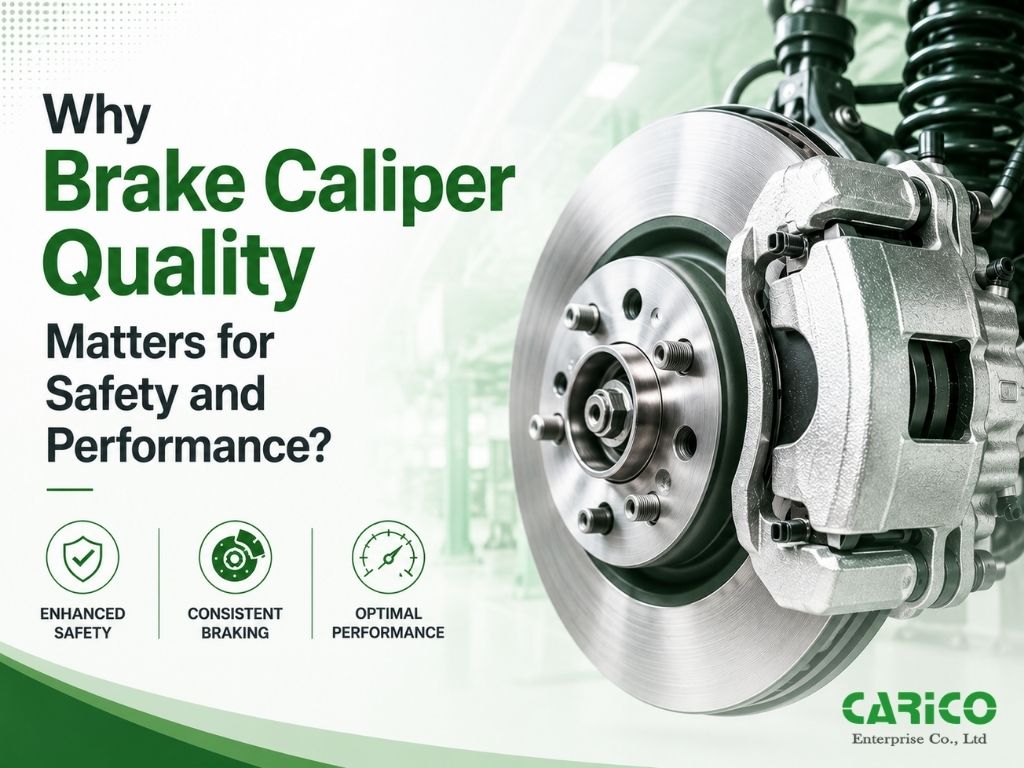
When discussing vehicle braking systems, most people immediately think about brake pads and brake discs. However, one component that often receives less attention—but plays an equally critical role—is the brake caliper. As the component responsible for applying pressure to the brake pads and generating stopping force, the brake caliper directly influences braking efficiency, vehicle control, and overall safety.
For automotive manufacturers, distributors, repair shops, and vehicle owners, understanding the importance of brake caliper quality is essential. While brake calipers may appear similar externally, differences in materials, manufacturing precision, sealing systems, and durability can significantly affect braking performance and long-term reliability.
In this article, we'll explore why brake caliper quality matters and how choosing the right brake caliper can contribute to safer and more consistent vehicle performance.
The Critical Role of a Brake Caliper
A brake caliper serves as the housing for the brake pads and pistons within a disc brake system. When the driver presses the brake pedal, hydraulic pressure forces the pistons outward, causing the brake pads to clamp onto the rotating brake disc.
Although this process happens in a fraction of a second, it must be repeated thousands of times throughout a vehicle's lifespan. Every braking event generates heat, friction, and mechanical stress. The caliper must manage these forces consistently while maintaining even pressure across the brake pads. If it cannot do so, braking performance becomes less predictable, and stopping distances may increase.
This is why the brake caliper is often considered one of the most important components in the entire braking system. It acts as the link between hydraulic pressure and actual braking force, directly influencing how effectively a vehicle can slow down and stop.
Why Manufacturing Precision Makes a Difference
Many brake calipers look nearly identical from the outside, but the true difference lies in what cannot be easily seen: manufacturing precision.
Critical areas such as piston bores, guide pin channels, mounting surfaces, and sealing grooves must be machined to exact specifications. These dimensions determine how smoothly the pistons move and how evenly braking force is distributed across the brake pads.
When precision is lacking, several problems can occur. The brake pads may wear unevenly, vibration can develop during braking, and the caliper may experience sticking or dragging issues. These problems often start small but gradually lead to reduced braking efficiency and higher maintenance costs.
For distributors and repair shops, poor machining quality can also result in increased warranty claims and customer complaints. This is why reputable manufacturers invest heavily in CNC machining, dimensional inspection, and quality assurance processes to ensure every caliper performs consistently.
Material Selection Impacts Strength and Durability
Brake calipers operate in an environment where high pressure and extreme temperatures are routine. As a result, material selection plays a major role in determining long-term performance.
The two most common brake caliper materials are cast iron and aluminum alloy.
Cast Iron vs Aluminum Brake Calipers
| Material | Advantages | Typical Applications |
|---|---|---|
| Cast Iron | High strength, excellent durability, resistant to deformation under heavy braking loads | SUVs, pickup trucks, commercial vehicles, heavy-duty applications |
| Aluminum Alloy | Lightweight, improved heat dissipation, reduced unsprung weight, better handling characteristics | Passenger cars, sports cars, performance-oriented vehicles |
While aluminum calipers are often associated with performance vehicles because of their weight-saving advantages, cast iron remains highly popular due to its durability and ability to withstand heavy loads. The best choice depends on the vehicle's intended use, but regardless of material, the quality of the casting and machining process remains critical.
A poorly manufactured aluminum caliper may perform worse than a properly engineered cast iron unit. Ultimately, material selection and manufacturing quality must work together to achieve optimal performance.
Heat Management Is Essential for Consistent Braking
Whenever a vehicle slows down, kinetic energy is converted into heat. Under demanding conditions such as mountain driving, towing, heavy traffic, or repeated high-speed braking, temperatures can rise dramatically.
A quality brake caliper is designed to maintain its structural integrity and performance under these extreme conditions. The housing must resist deformation, the pistons must continue moving smoothly, and the seals must withstand repeated thermal cycles without deteriorating.
Poor heat management can contribute to brake fade, inconsistent pedal feel, and accelerated wear of surrounding components. Over time, excessive heat can also shorten the lifespan of brake pads, brake fluid, and seals.
This is why thermal performance has become a major focus in modern brake caliper design. High-quality calipers help maintain consistent braking behavior even when operating temperatures increase significantly.
The Importance of Sealing Systems
One aspect of brake caliper design that often goes unnoticed is the sealing system.
Inside every caliper are piston seals and protective dust boots that help prevent water, dirt, road salt, and other contaminants from entering critical areas. These components may seem minor compared to the caliper housing itself, but they play a significant role in long-term durability.
When contaminants enter the piston bore area, corrosion can begin to develop. This corrosion may eventually cause the piston to stick or move unevenly, leading to brake drag, uneven pad wear, and reduced braking performance.
For vehicles operating in harsh climates, effective sealing becomes even more important. A high-quality sealing system helps ensure smooth piston operation throughout the caliper's service life, reducing maintenance requirements and improving reliability.
How Brake Caliper Quality Affects Vehicle Safety
Brake calipers are not simply mechanical components—they are safety-critical parts.
Every time a driver presses the brake pedal, the caliper must convert hydraulic pressure into predictable and balanced clamping force. If one caliper performs differently from another due to poor manufacturing quality, braking stability can be compromised.
This issue becomes especially noticeable during emergency braking situations. Uneven braking force can cause a vehicle to pull to one side, reduce steering stability, and increase stopping distance. Even small inconsistencies can affect driver confidence and overall vehicle control.
The relationship between brake caliper quality and vehicle performance can be summarized below:
How Brake Caliper Quality Impacts Vehicle Performance
| Brake Caliper Quality Factor | Impact on Vehicle Performance |
|---|---|
| Precision Manufacturing | Consistent braking force and reduced vibration |
| High-Quality Materials | Better durability and resistance to deformation |
| Effective Heat Management | Stable braking performance during repeated braking |
| Reliable Sealing System | Longer service life and lower maintenance costs |
| Accurate Fitment | Even pad wear and predictable braking response |
For commercial fleets and high-mileage vehicles, these benefits can translate directly into reduced downtime, improved safety records, and lower operating costs.
Why Quality Matters for Aftermarket Distributors
For aftermarket distributors, brake caliper quality affects more than just vehicle performance. It directly influences customer satisfaction, warranty costs, and brand reputation.
Low-quality calipers often lead to premature failures, excessive returns, and additional labor costs for repair shops. In contrast, dependable products help build trust and strengthen long-term business relationships.
As global vehicle owners continue to prioritize safety and reliability, demand for brake components that meet OEM-level standards continues to grow. Offering reliable brake calipers is therefore not only a technical requirement but also a competitive advantage.
As an experienced auto parts supplier, Carico supports global customers with a diverse range of braking, steering, suspension, and chassis components. Our goal is to provide dependable automotive parts that help distributors and repair professionals meet the expectations of today's market.
Conclusion
The brake caliper is one of the most important components in a vehicle's braking system, yet its quality is often underestimated. From manufacturing precision and material selection to heat management and sealing performance, every aspect of brake caliper design influences safety, durability, and braking consistency.
While brake pads and brake discs naturally wear over time, a high-quality brake caliper helps ensure those components perform as intended throughout their service life. Investing in reliable brake calipers can reduce maintenance costs, improve vehicle safety, and deliver a better driving experience.
If you are looking for dependable braking components for aftermarket distribution or automotive repair applications, contact Carico today to learn more about our comprehensive range of automotive parts and how we can support your business with reliable, quality-focused solutions.