

BLOG
How Wheel Hub Precision Affects Vehicle Safety, Bearing Life, and Driving Performance
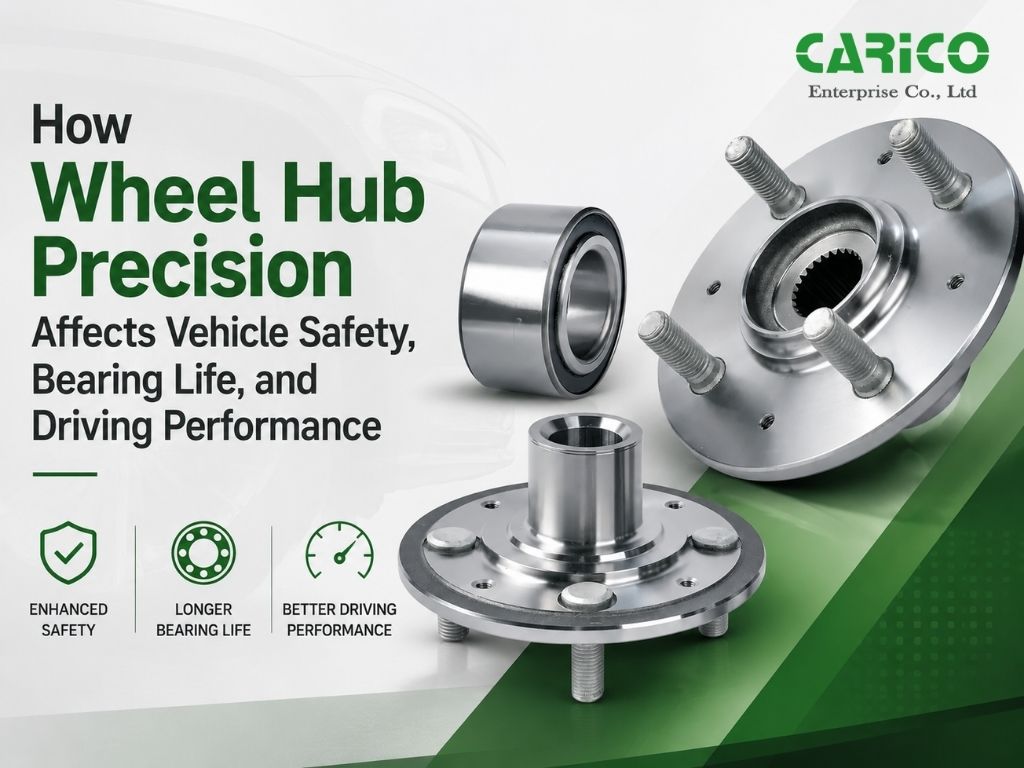
When people think about vehicle safety, they often focus on brake systems, suspension components, or tires. However, one equally important component that is frequently overlooked is the wheel hub. Although relatively compact, the wheel hub serves as the foundation of the wheel assembly, supporting the wheel bearing while maintaining precise alignment between the wheel, brake rotor, and suspension system.
As an experienced auto parts supplier, Carico understands that wheel hub quality is about much more than simply fitting the vehicle. Precision manufacturing directly affects bearing life, steering stability, braking performance, and ultimately, driving safety. Even small dimensional variations can influence how forces are distributed throughout the wheel assembly, leading to premature wear or reduced vehicle performance.
In this article, we'll explain why wheel hub precision matters, how it impacts other automotive components, and what distributors and buyers should consider when selecting high-quality wheel hubs.
What Does a Wheel Hub Do?
The wheel hub is the central mounting component that connects the wheel to the suspension and steering system. It provides the mounting surface for the brake disc or brake drum while housing the wheel bearing that allows the wheel to rotate smoothly.
Every time a vehicle accelerates, brakes, or turns, the wheel hub transfers multiple types of forces throughout the chassis. These include:
- Vehicle weight
- Cornering loads
- Braking forces
- Road impacts
- Engine torque
Because it serves as the structural connection between rotating and non-rotating components, the wheel hub must maintain exceptional dimensional accuracy under constant mechanical stress.
Why Precision Manufacturing Is So Important
At first glance, two wheel hubs may appear identical. However, their actual performance depends heavily on machining accuracy.
Critical dimensions such as the bearing seat, flange face, center bore, and bolt hole positions must all be manufactured within extremely tight tolerances. If any of these dimensions fall outside specification, the hub may no longer distribute loads evenly.
This can create a chain reaction throughout the wheel assembly. The wheel bearing may experience uneven loading, the brake disc may develop excessive runout, and steering alignment can gradually deteriorate. Although these issues often begin subtly, they can eventually reduce driving comfort, shorten component life, and increase maintenance costs. For this reason, precision machining is one of the most important quality indicators when evaluating wheel hubs.
Precision Directly Influences Bearing Life
One of the most significant effects of wheel hub precision is its relationship with wheel bearing durability.
Wheel bearings are designed to operate with evenly distributed loads. When the hub is manufactured accurately, the bearing rotates smoothly and experiences balanced forces during everyday driving.
However, if the bearing seat is slightly oversized, undersized, or not perfectly concentric, the bearing may experience abnormal stress throughout each rotation. Instead of wearing evenly, localized pressure begins to develop inside the bearing races.
The result is accelerated bearing wear, increased operating temperature, and eventually bearing noise or failure. This is why a high-quality wheel hub does more than support the bearing—it helps maximize bearing service life by maintaining proper load distribution.
Better Precision Means Better Driving Performance
Many drivers don't immediately associate wheel hubs with vehicle handling, but they play an important role in overall driving stability.
Because the wheel hub maintains the wheel's mounting position, even minor dimensional errors can influence steering response and vehicle balance. During highway driving, these small deviations may appear as steering wheel vibration or reduced directional stability. During braking, they can contribute to pedal pulsation or uneven braking force.
Precision wheel hubs help ensure:
- Smooth wheel rotation
- Stable steering response
- Consistent braking performance
- Reduced vibration at higher speeds
Although these improvements may not always be visible, drivers can often feel the difference in overall vehicle refinement.
The Relationship Between Wheel Hub Quality and Other Components
A wheel hub rarely fails alone. Because it works together with several surrounding components, poor hub quality often shortens the lifespan of the entire wheel assembly.
| Component | Effect of Poor Wheel Hub Precision |
|---|---|
| Wheel Bearing | Uneven load distribution and premature wear |
| Brake Disc | Increased runout and brake vibration |
| Wheel Studs | Uneven mounting stress |
| Suspension Components | Additional vibration transferred to bushings and control arms |
| Tires | Irregular wear due to alignment changes |
Selecting a precision-manufactured wheel hub therefore benefits not only the hub itself but also the durability of multiple related components.
Material Quality and Manufacturing Standards Matter
Precision machining alone is not enough. Material quality also determines how well a wheel hub performs throughout its service life.
High-quality wheel hubs typically use carefully selected steel combined with controlled heat treatment to achieve the required balance between strength and toughness.
During manufacturing, reputable suppliers also perform multiple inspections, including dimensional measurement, hardness verification, and surface quality checks. These procedures help ensure each hub meets the required specifications before reaching customers.
For aftermarket distributors, consistent manufacturing standards are essential because they reduce product variation, improve installation accuracy, and minimize warranty claims.
Choosing the Right Wheel Hub Supplier
When evaluating wheel hub suppliers, buyers should look beyond price alone.
A dependable supplier should demonstrate:
- Precision CNC machining capabilities
- Strict dimensional quality control
- Reliable material sourcing
- Stable production consistency
- Broad vehicle application coverage
- OEM-quality fitment
These factors help ensure that each wheel hub performs consistently throughout its expected service life while reducing installation issues for repair shops and end users.
As an experienced auto parts supplier, Carico provides wheel hubs manufactured to meet demanding quality standards for global aftermarket customers. By focusing on precision manufacturing, consistent quality control, and dependable fitment, we help distributors deliver reliable products that support long-term customer satisfaction.
Conclusion
Although often hidden behind the wheel, the wheel hub is one of the most important structural components in a vehicle. Its manufacturing precision directly affects wheel bearing life, braking performance, steering stability, and overall driving safety.
Choosing a high-quality wheel hub is not simply about replacing a worn part—it is about protecting the entire wheel assembly and ensuring reliable vehicle performance over the long term.
If you're looking for dependable wheel hub solutions for aftermarket distribution or automotive repair applications, contact Carico today to learn more about our comprehensive range of steering, suspension, braking, and wheel hub components designed for consistent quality and long-lasting performance.